What Affects a UK Property’s Value?
Every valuation, however it's produced, comes down to the same handful of factors. Here's what moves the number, roughly in order of impact.
1. Location
By far the biggest factor, and the hardest to change. Price varies not just by town or postcode district but street by street, school catchment boundaries, proximity to a station, and even which side of a road can move value noticeably. This is why comparable-sales tools narrow their search radius as tightly as the data allows before widening it.
2. Size and layout
Floor area (usually measured in square feet or square metres) and bedroom count are the two figures every valuation model anchors to. But layout matters beyond raw size, a well-configured 3-bed with a sensible kitchen-diner will often outvalue an awkwardly split property with the same floor area.
3. Property type and tenure
Detached, semi-detached, terraced and flats sit in genuinely different price tiers even at identical size, and tenure (leasehold vs freehold, and for leasehold, remaining lease length) can move value by a meaningful percentage on its own. See our leasehold vs freehold guide.
4. Condition and recent improvements
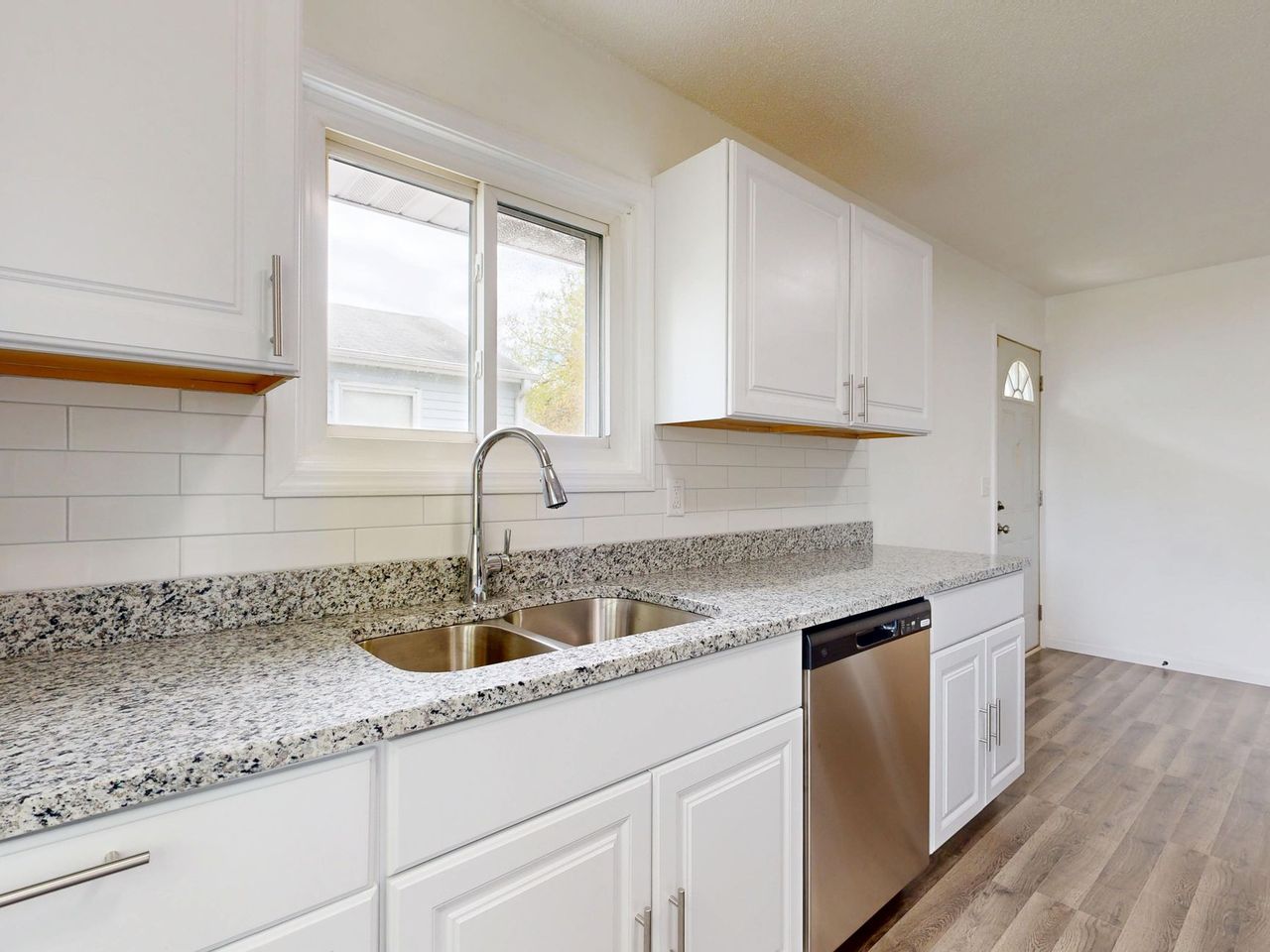
This is exactly what automated valuations can't see from an address alone. A recently renovated kitchen and bathroom, a loft conversion, or a rewire can add real value; conversely, visible disrepair, an old boiler, or an outdated layout will be reflected in what a surveyor or buyer is willing to pay, even if a comparable-sales estimate doesn't know to discount for it.
5. Energy efficiency (EPC rating)
An increasingly significant factor as energy costs and lending criteria evolve, see our EPC and value guide for the detail.
6. Market timing and recency of comparable sales
The same property can be worth genuinely different amounts six months apart in a fast-moving market. Any valuation is only as good as how recent (and how well HPI-adjusted) its comparable sales are, a five-year-old sale, even correctly adjusted for average market movement, can miss a very local shift (a new station opening, a big local employer arriving or leaving).
7. Outdoor space, parking, and extensions
A garden, off-street parking, or a garage all add value, with the exact premium varying hugely by area, parking is worth far more in dense urban postcodes than in areas where it's simply the norm.
Putting it together
No automated tool captures all of these perfectly, it's working from comparable sales and whatever data (bedrooms, property type, floor area) it has about the specific address. The gap between an automated estimate and reality is almost always explained by one or more of factors 4-7 above: condition, EPC, timing, and features a database doesn't record.
A worked example
Two 3-bedroom semis on the same street, both 1,050 sqft, both sold within the same month. House A has an original 1980s kitchen and bathroom and a single-glazed rear extension. House B has a renovated kitchen-diner, a loft conversion adding a fourth usable room, and double glazing throughout. A comparable-sales tool looking purely at bedroom count, property type, and location would likely value them almost identically, yet House B could realistically achieve 10-20% more, entirely down to condition and improvements (factors 4 and 7 above), which no address-only dataset can see.
Frequently asked questions
Does a garden always add value?
Almost always, but the premium varies hugely by area, a garden is worth proportionally more in a dense urban flat market than in a suburban area where every property already has one. A well-kept, usable garden also tends to add more than a large but neglected one.
How much does a loft conversion typically add?
It varies by region and whether it adds a genuine extra bedroom (with proper head height and building-regulations sign-off) versus just storage space, a properly converted loft adding a fourth bedroom to a 3-bed can meaningfully outperform its build cost in added value, though this varies considerably by local market.
Why did my neighbour's identical house sell for more?
Almost always one of: condition and improvements (factor 4), a better EPC rating, more favourable market timing, or features like parking/outdoor space that a comparable-sales tool weighted differently. Genuinely identical outcomes are rare once you account for all seven factors.
Can I estimate how much a specific improvement will add before doing it?
Only roughly, and it's genuinely local, the same loft conversion or kitchen renovation can add very different amounts depending on what buyers in your specific area already expect as standard. A local estate agent's opinion, informed by recent comparable sales of already-improved properties nearby, is usually more reliable than a generic rule of thumb.
In summary
- Location and size/layout set the baseline; condition, tenure, EPC rating, market timing, and features like parking or a garden move a property up or down from there.
- Condition and recent improvements (factor 4) are the single biggest thing an address-only automated valuation cannot see.
- The gap between an automated estimate and what a property achieves is almost always explained by these harder-to-quantify factors, not an error in the underlying data.
- Use an automated valuation as your baseline, then adjust mentally (or get a professional opinion) for whatever your specific property has that a database can't record.
If you're preparing to sell, the practical takeaway is that factors 1-3 (location, size, type/tenure) are largely fixed and already reflected in any comparable-sales baseline, while factors 4-7 (condition, EPC, timing, features) are where you have genuine influence over the final price achieved, worth focusing your pre-sale effort there rather than on things you can't change.
It's also worth remembering that these factors interact, not just add up independently, a poor EPC rating matters more in a competitive, price-sensitive market than in one where buyers are scarce and less selective, and a garden matters more in a family-housing area than in a market dominated by young professional buyers.
For the full method behind how these factors turn into a number, see our guide on how UK property valuations work.
Two factors worth checking specifically: whether the property sits in a flood risk area, and whether any extension or loft conversion added the value it cost.
One specific situation worth its own read: how listed building status affects value, where the usual comparable-sales approach gets much harder to apply.
Start with the data-driven baseline
Get a free valuation built from real comparable sales near your address.
Get my valuation